Today, when AI is almost rising in every field, the ability to adapt and optimise operations has now become very important for sustained growth and competitive advantage. Many organisations are now turning to business process automation (BPA) to achieve these goals, transforming manual, repetitive tasks into streamlined, efficient workflows. This strategic shift not only enhances productivity but also frees up valuable human capital to focus on more complex, value-adding activities.
If you’re looking to automate business processes and drive significant improvements, understanding which processes to prioritise for automation is crucial. This blog will guide you through the top business processes that yield the most substantial returns when automated, highlighting the profound impact of automation in business.
Key Benefits of Automation
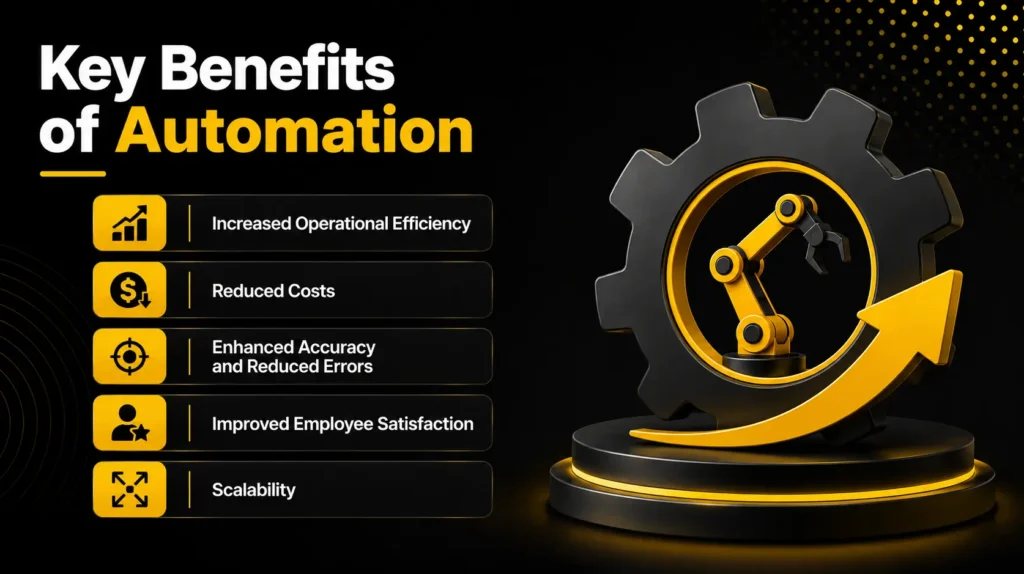
Embracing automation in business offers a multitude of advantages that extend beyond mere cost savings. The benefits of automation are far-reaching, impacting various facets of an organisation:
- Increased Operational Efficiency: Automated processes execute tasks faster and with greater consistency than human counterparts, leading to quicker turnaround times and improved service delivery.
- Reduced Costs: By minimising manual effort, businesses can reallocate resources, reduce overtime, and decrease the likelihood of costly errors. AI, for example, can save UK businesses up to 98% on processing costs compared to manual methods.
- Enhanced Accuracy and Reduced Errors: Machines follow predefined rules precisely, virtually eliminating human error. This is particularly critical in data entry, financial calculations, and compliance-related tasks.
- Improved Employee Satisfaction: Automating mundane and repetitive tasks liberates employees from tedious work, allowing them to engage in more stimulating and strategic activities, thereby boosting morale and job satisfaction.
- Better Customer Experience: Faster service, fewer errors, and consistent interactions contribute to a more positive customer journey, fostering loyalty and satisfaction.
- Scalability: Automated systems can easily handle increased workloads without a proportional increase in human resources, enabling businesses to scale operations efficiently while streamlining business operations.
- Greater Transparency and Compliance: Automated workflows provide clear audit trails and ensure adherence to regulatory requirements, simplifying compliance management.
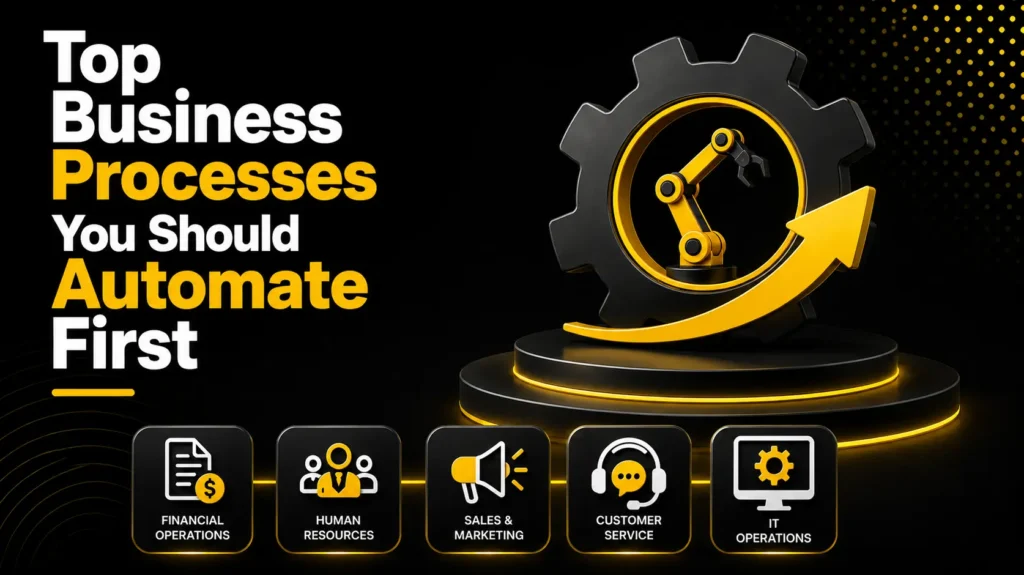
Top Business Processes to Automate First
When considering how to automate business processes, it’s essential to identify areas where automation can deliver the most immediate and impactful results. Here are some of the top candidates for your initial business process automation strategies:
1. Financial Operations
Financial departments are often burdened with highly repetitive, rule-based tasks that are ripe for automation. Automating these processes can significantly enhance efficiency in business processes and reduce the risk of financial discrepancies.
- Invoice Processing: Manual invoice handling is time-consuming and prone to errors. Automation can capture invoice data, validate it against purchase orders, and initiate payment workflows automatically. This not only speeds up payment cycles but also improves vendor relationships.
- Expense Management: Employees spending hours on expense reports can be a thing of the past. Automated systems can capture receipts, categorise expenses, and initiate reimbursement processes, ensuring compliance with company policies.
- Bank Reconciliation: As highlighted earlier, many firms still manually reconcile transactions. Automating this process can match transactions from bank statements with internal records, flagging discrepancies for human review and drastically reducing the time spent on this critical task.
2. Human Resources (HR)
HR departments manage a plethora of administrative tasks, from onboarding new hires to managing leave requests. Automation in business can transform HR operations, making them more efficient and employee-friendly.
- Employee Onboarding: This process involves numerous forms, compliance checks, and system setups. Automating onboarding can streamline document collection, benefits enrolment, IT provisioning, and training assignments, ensuring a smooth and consistent experience for new employees.
- Leave and Absence Management: Manual tracking of leave requests, approvals, and accruals can be complex. Automated systems can manage the entire lifecycle, from submission to approval and record-keeping, reducing administrative overhead.
- Payroll Processing: While often already semi-automated, further integration and automation of payroll inputs (e.g., timesheets and bonuses) can minimise manual data entry and ensure accurate, timely payments.
3. Sales and Marketing
In competitive markets, speed and personalisation are key. Business process automation can empower sales and marketing teams to engage with prospects and customers more effectively.
- Lead Nurturing and Qualification: Automated workflows can score leads based on engagement, send personalised follow-up emails, and assign qualified leads to sales representatives, ensuring no opportunity is missed. A significant 58% of marketing leaders have already automated email marketing.
- CRM Updates: Sales teams often spend considerable time updating customer relationship management (CRM) systems. Automation can automatically log calls, update contact information, and create tasks based on customer interactions, ensuring data accuracy and freeing up sales reps for selling.
- Social Media Scheduling and Monitoring: Tools can automate the scheduling of posts across various platforms and monitor mentions or keywords, allowing marketing teams to maintain a consistent online presence and respond promptly to engagement.
4. Customer Service
Delivering exceptional customer service is a differentiator. Automation in business can enhance response times, provide consistent support, and improve customer satisfaction.
- Ticket Routing and Prioritisation: Automated systems can analyse incoming support requests, categorise them, and route them to the most appropriate agent or department, ensuring faster resolution.
- Automated Responses and FAQs: For common queries, chatbots and automated email responses can provide instant answers, reducing the workload on human agents and offering 24/7 support.
- Feedback Collection: Post-interaction surveys and feedback requests can be automated, providing valuable insights into customer satisfaction and areas for improvement.
5. IT Operations
IT departments can leverage business process automation to manage infrastructure, resolve issues, and ensure system stability more efficiently.
- User Provisioning and Deprovisioning: Automating the creation and deletion of user accounts, access rights, and software licences ensures security and compliance while reducing manual IT workload.
- System Monitoring and Alerting: Automated tools can continuously monitor system performance, identify anomalies, and trigger alerts or even initiate self-healing actions, preventing potential outages.
- Software Deployment and Updates: Automating the deployment of new software or updates across an organisation ensures consistency, reduces downtime, and minimises manual intervention.
Overcoming Challenges in Your Automation Journey
While the path to automating business processes is rewarding, it is not without its hurdles. Understanding these challenges early on is a key part of successful business process automation strategies.
1. Resistance to Change: Employees may fear that automation will replace their roles. Clear communication about how automation handles the “boring” work, allowing them to focus on higher-value tasks, is essential for gaining buy-in.
2. Data Quality and Silos: Automation is only as good as the data it processes. If your information is scattered across different departments or is inaccurate, the automated output will be flawed. Streamlining business operations often requires a “clean-up” phase before full automation.
3. Integration Complexities: Connecting legacy systems with modern Workflow Automation tools can sometimes be tricky. Choosing tools with robust APIs or using middleware can help bridge these gaps.
4. Skill Gaps: Your team may need training to manage and monitor new automated workflows. Investing in upskilling ensures that your organisation can maintain and optimise these systems over the long term.
Addressing these points early ensures that you don’t just implement technology but actually improve the underlying efficiency in business processes.
Implementing Effective Business Process Automation Strategies
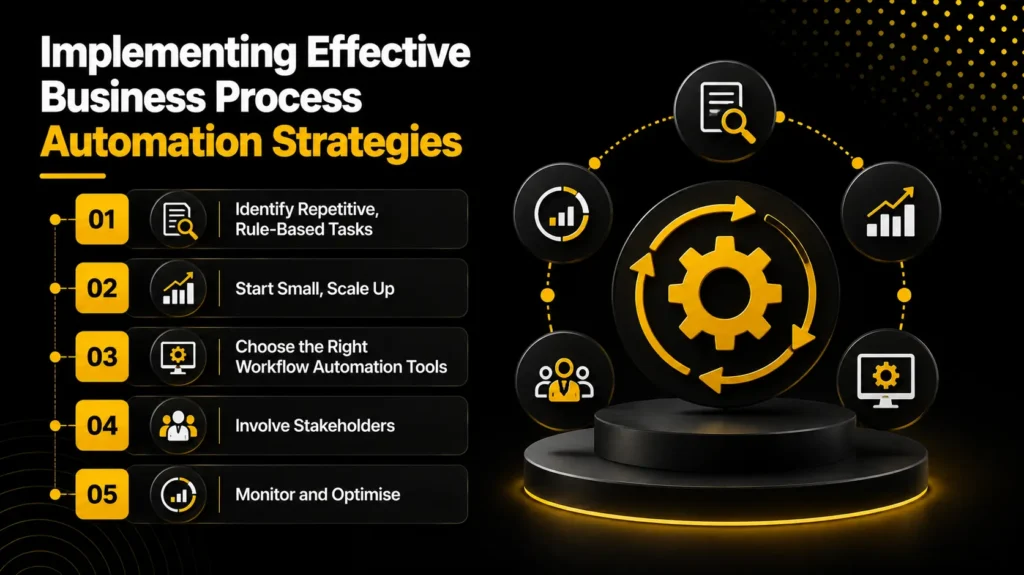
Successfully implementing business process automation strategies requires careful planning and execution. It’s not just about adopting technology; it’s about rethinking how work gets done. Here are some considerations:
- Identify Repetitive, Rule-Based Tasks: These are the prime candidates for automation. Look for processes that are performed frequently, involve clear steps, and have predictable outcomes.
- Start Small, Scale Up: Begin with a pilot project in a single department to demonstrate the benefits of automation and gather lessons learned before rolling out automation across the entire organisation.
- Choose the Right Workflow Automation Tools: The market offers a wide array of workflow automation tools, from simple integration platforms like Zapier and Make to more comprehensive enterprise-level solutions like Microsoft Power Automate. Select tools that align with your existing tech stack, budget, and technical capabilities.
- Involve Stakeholders: Engage employees who perform the processes being automated. Their insights are invaluable for identifying pain points and designing effective automated workflows.
- Monitor and Optimise: Automation is not a one-time setup. Continuously monitor the performance of automated processes, gather feedback, and make adjustments to ensure they remain efficient and effective in streamlining business operations.
Workflow Automation Tools: A Brief Overview
The landscape of workflow automation tools is diverse, catering to various needs and technical proficiencies. Here’s a quick look at some popular options:
- Zapier: An excellent choice for connecting over 6,000 web applications, allowing users to create multi-step workflows without coding. It’s user-friendly and ideal for automating tasks between different software platforms.
- Microsoft Power Automate: Geared towards Microsoft ecosystems, this tool offers robust capabilities for automating tasks within Office 365, Azure, and other Microsoft services. It provides more advanced logic functions for complex workflows.
- Make (formerly Integromat): Known for its visual workflow builder, Make allows for sophisticated data manipulation and complex scenarios, making it suitable for users who need more control over their automation logic.
These tools exemplify how accessible business process automation has become, enabling businesses to automate business processes without extensive technical expertise.
Conclusion
Embracing business process automation is no longer an option but a strategic imperative for businesses aiming to thrive in the modern economy. By intelligently choosing which business processes to automate first, organisations can unlock significant benefits of automation, leading to enhanced efficiency in business processes, reduced operational costs, and a more engaged workforce. The journey towards comprehensive automation in business begins with identifying those high-impact areas and leveraging the right business process automation strategies and workflow automation tools for streamlining business operations.
Start your automation journey today and realise the transformative power of streamlined operations. For expert guidance and tailored solutions, reach out at coffee@sparkeighteen.com.