According to a study by Harvard Business School professor Clayton Christensen, nearly 30,000 new products are introduced every year, and a staggering 95% of them fail (MIT Professional Education). For startups, the stakes are even higher, with CB Insights reporting that 42% of startups fail simply because there is no market need for what they are building (IdeaProof).
Whether you are trying to build a minimum viable product or scaling a mature platform, the path to success is littered with common pitfalls. By understanding these mistakes early, you can refine your product development concept and ensure your hard work results in a solution that users actually value. Using a structured product development method is the first step toward long-term stability. A reliable product development method provides a framework for consistent innovation.
In this product development guide, we will break down the five most common errors that sink promising ideas and provide actionable strategies to turn your idea into a product that thrives in today’s competitive market. By following a clear product development guide, you can navigate the complexities of the modern tech landscape. A comprehensive product development guide is essential for any team looking to scale.
1. Skipping the Market Research Homework
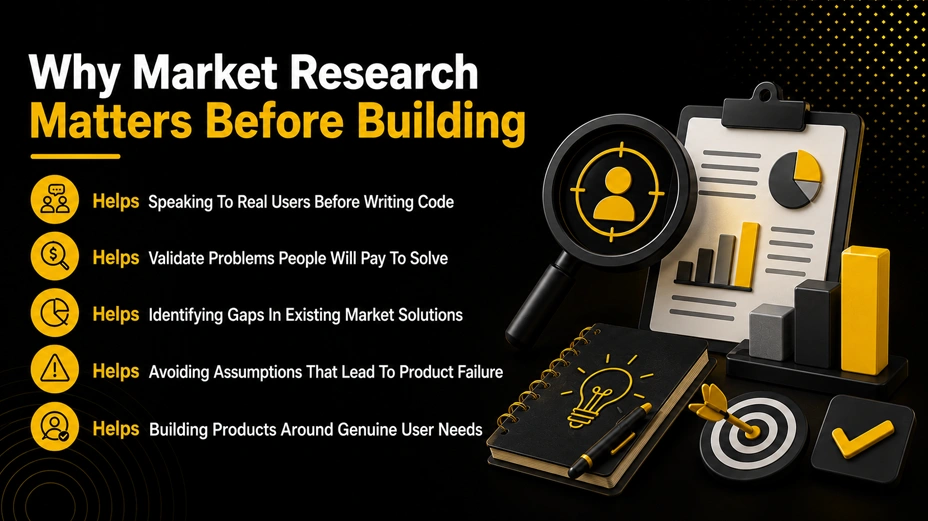
The most dangerous mistake any team can make when developing a new product is assuming they already know what the customer wants. Many founders fall in love with their own product development concept and bypass the rigorous validation needed to prove its viability. When developing a new product, you must be prepared to have your assumptions challenged. Every time you are developing a new product, market research should be your compass.
Without a solid foundation of data, you are essentially gambling with your resources. Effective product development for startups begins with understanding the “jobs to be done” for your target audience. If you don’t do your homework, you risk building a solution for a problem that doesn’t exist. For many, product development for startups is a trial by fire that rewards those who listen to their users. In the world of product development for startups, speed must never come at the expense of market fit. Successful product development for startups requires a deep connection with the end user.
How to Avoid It:
- Conduct User Interviews: Speak to at least 20–30 potential users before writing a single line of code.
- Analyse Competitors: Look for gaps in existing solutions rather than just copying features.
- Validate the Pain Point: Ensure the problem you are solving is “painful” enough that people are willing to pay for a fix.
2. Overcomplicating the First Version
When you set out to build a minimum viable product, it is easy to get distracted by “feature creep.” You might see the grand vision of what the product could be in five years and try to pack all of that into version 1.0. If you want to build a minimum viable product that actually launches, you must learn to say “no” to non-essential features. When you build a minimum viable product, focus on the core value above all else.
However, a bloated product development method often leads to delays, increased costs, and a confusing user experience. The goal of developing a minimum viable product is to test your core hypothesis with the least amount of effort, not to deliver a feature-complete masterpiece. A disciplined product development method focuses on the “minimum” to ensure speed. Using a proven product development method helps maintain this focus.
Why Simplicity Wins:
- Faster Time-to-Market: You can get feedback from real users months earlier.
- Reduced Costs: You don’t waste money building features that users might never use.
- Clearer Value Proposition: Users can immediately understand the one thing your product does exceptionally well.
3. Ignoring the “Viable” in MVP
On the flip side of overcomplication is the mistake of making the MVP too minimal. Some teams take the product development guide too literally and release something that is so buggy or under-designed that it fails to provide any value. To turn your idea into a product, you must ensure that your first version is more than just a landing page. A good product development guide will always emphasise the need for quality.
If you want to turn your idea into a product, your first version must still be functional and reliable. Developing a minimum viable product requires a balance: it must be small enough to build quickly but robust enough to solve the user’s problem. If the experience is frustrating, you won’t get “feedback”—you’ll just get churn. When developing a minimum viable product, quality should never be sacrificed for speed. The process of developing a minimum viable product is about finding the shortest path to value.
The MVP Sweet Spot:
| Element | Too Minimal | Just Right (Viable) |
|---|---|---|
| Design | Unusable UI | Simple but clean interface |
| Features | Half-finished tools | 1-2 fully functional core features |
| Reliability | Constant crashes | Stable performance for core tasks |
| Feedback | None collected | Integrated feedback loops |
4. Building in a Silo Without Feedback
Many developers believe that developing a new product is a linear process: design, build, and then launch. In reality, the most successful product development method is a loop. If you wait until launch day to show your product to the world, you have waited too long. A modern product development method thrives on transparency and constant iteration. When developing a new product, your users should be your partners.
Effective product development for startups should be collaborative. By keeping your users in the dark until the final reveal, you miss the opportunity to course-correct based on real-world usage. This often leads to a “perfect” product that solves the wrong problem. Successful product development for startups depends on the ability to listen and adapt. In the context of product development for startups, isolation is the enemy of innovation.
How to Stay Connected:
- Release Early and Often: Use beta groups or “early access” programmes to gather data.
- Implement Analytics: Track how users actually interact with your tools, not just what they say they do.
- Be Prepared to Pivot: If the data shows that users prefer a secondary feature over your main one, be brave enough to change direction.
5. Failing to Plan for Success
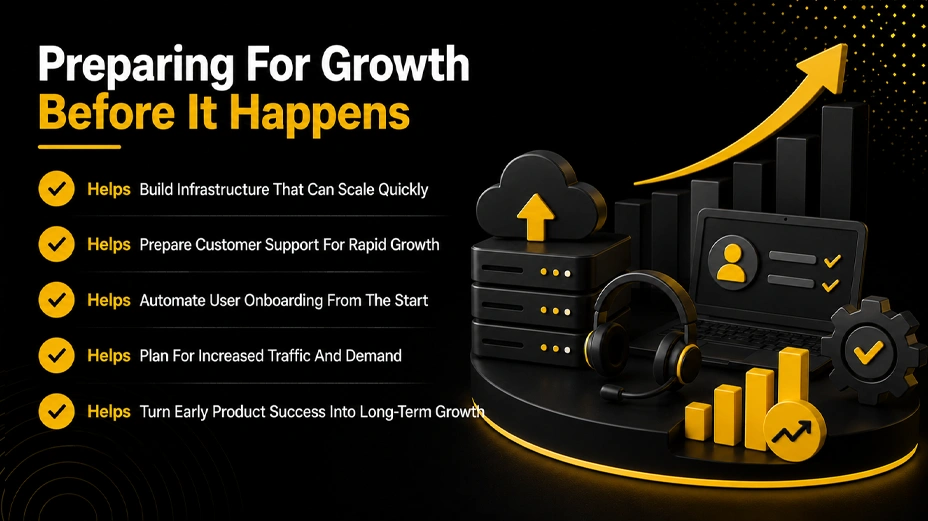
It sounds counter-intuitive, but many teams fail because they weren’t prepared to win. When you build a minimum viable product that suddenly goes viral, your infrastructure, customer support, and team processes are put under immense pressure. If you build a minimum viable product without considering scalability, you might find yourself a victim of your own success. Every time you build a minimum viable product, you should have a plan for what happens if it takes off.
A comprehensive product development guide must include a success plan. If you turn your idea into a product and it gains 10,000 users overnight, can your servers handle the load? Do you have a way to onboard those users without manual intervention? Without scalability, success can quickly turn into a reputational disaster. To truly turn your idea into a product that lasts, you must think about the “what if” of success. When you turn your idea into a product, scalability should be baked into the vision.
Success Readiness Checklist:
- Scalable Infrastructure: Use cloud services that can expand as your traffic grows.
- Automated Onboarding: Ensure users can start using the product without needing a 1-on-1 demo.
- Customer Support Systems: Have a ticketing system or FAQ ready before the influx begins.
Conclusion
The journey of developing a new product is rarely a straight line. It is a process of constant learning, testing, and refining. By avoiding these five common mistakes—skipping research, overcomplicating the build, ignoring viability, working in isolation, and failing to scale—you significantly increase your chances of joining that elite 5% of products that succeed.
Remember, the best product development method is one that puts the user at the centre of every decision. Whether you are developing a minimum viable product or a complex enterprise solution, stay humble, stay curious, and keep validating. Your product development concept will only grow stronger with every piece of feedback you receive. A solid product development concept is the foundation of every great brand. By refining your product development concept, you ensure your product remains relevant.
If you need a hand with your product development guide or want to ensure your next launch hits the mark, you can reach out at coffee@sparkeighteen.com