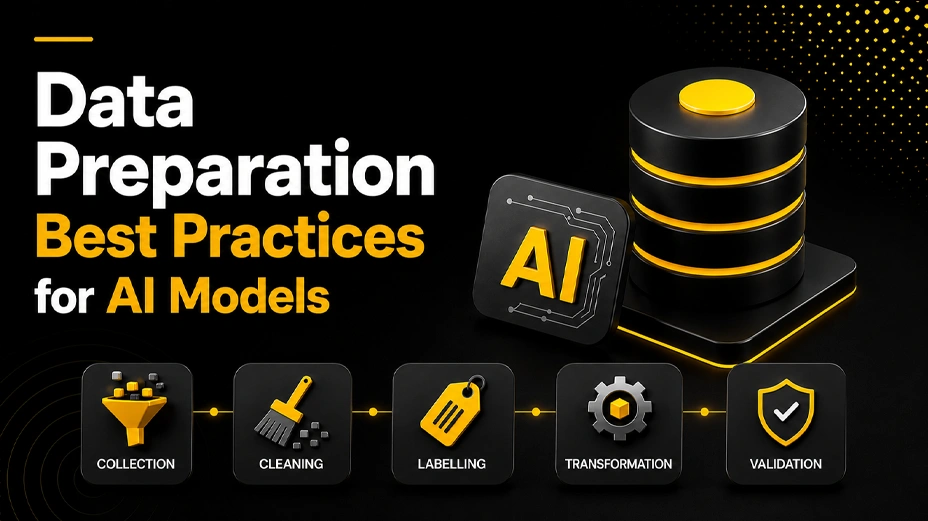
Artificial intelligence is only as effective as the data behind it. Even the most advanced algorithms struggle when the information used for training is incomplete, inconsistent, or poorly structured. This is why businesses investing in AI are now paying close attention to data preparation before moving into deployment.
Whether organisations are using AI for data analysis, improving customer experiences, or automating operations, properly prepared data forms the backbone of reliable AI performance. Clean, accurate, and well-governed datasets help companies reduce errors, improve prediction quality, and make smarter business decisions.
In this blog, we will explore the best practices involved in preparing data for AI systems, the role of AI training datasets, and how organisations can strengthen outcomes through proper governance and processing strategies.
Why Data Preparation Matters in AI
AI systems learn patterns from data. If the input data contains errors, duplicates, or bias, the output generated by the model will reflect those same issues.
This is especially important for businesses using AI for data analytics to make operational or financial decisions. Inaccurate insights can lead to flawed forecasting, customer dissatisfaction, and increased operational costs.
Strong data preparation for AI helps organisations:
- Improve model accuracy
- Reduce bias in predictions
- Increase scalability
- Accelerate deployment
- Strengthen compliance and governance
- Improve consistency across datasets
Companies involved in training AI models often spend more time preparing data than building the actual model itself. Moreover, data scientists spend nearly 80% of their time collecting and organising data before analysis begins.
Understanding the Core Components of AI Data Preparation
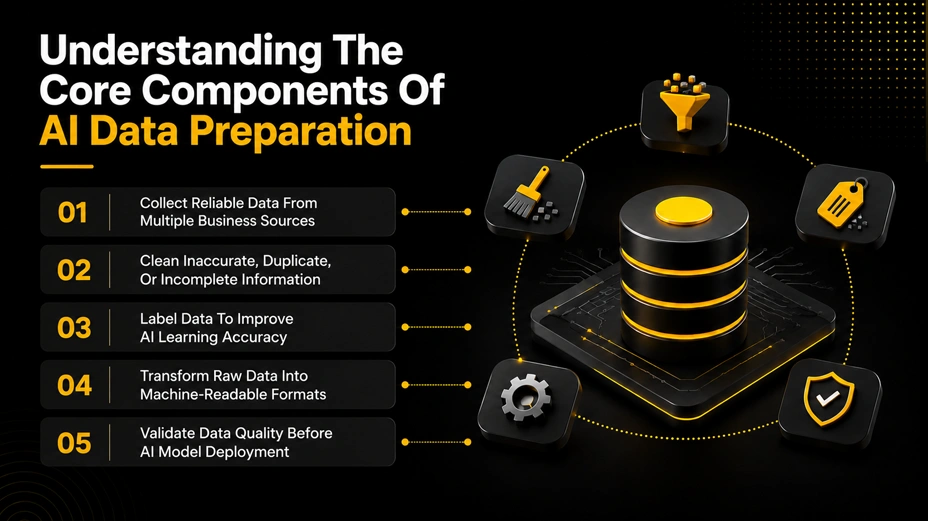
Before businesses begin creating AI models, they need a structured approach to preparing information. Data preparation is not a single task. It involves multiple stages that ensure the data is reliable and usable.
1. Data Collection
The first step involves gathering information from various sources, such as:
- CRM systems
- Business applications
- IoT devices
- Social media platforms
- Customer databases
- Cloud storage systems
For businesses using AI for data analysis, combining structured and unstructured data often creates richer insights.
However, data collection must align with strong AI data governance standards to ensure security, compliance, and privacy regulations are maintained.
2. Data Cleaning
Data cleaning removes inaccuracies that can affect AI outcomes. This stage is critical for improving the quality of AI training datasets.
Common cleaning activities include:
- Removing duplicate entries
- Correcting formatting inconsistencies
- Handling missing values
- Removing irrelevant information
- Fixing inaccurate labels
Poor data quality can significantly impact businesses using AI for data analytics because AI systems rely heavily on pattern recognition.
3. Data Labelling
Many machine learning models require labelled datasets to learn correctly. During this process, raw information is tagged and categorised.
Examples include:
- Identifying objects in images
- Categorising customer feedback
- Tagging medical records
- Marking fraudulent transactions
Proper labelling improves the effectiveness of training AI models and reduces prediction errors during deployment.
4. Data Transformation
AI systems often require data in a specific format. Transformation converts raw information into structured and machine-readable formats.
This stage may involve:
- Normalisation
- Standardisation
- Feature extraction
- Encoding categorical values
Businesses investing in AI data processing use these techniques to improve compatibility across platforms and systems.
5. Data Validation
Validation ensures the prepared data meets quality standards before entering AI systems.
This includes checking the following:
- Accuracy
- Consistency
- Completeness
- Relevance
- Security compliance
Validation is essential for organisations focused on creating AI models that deliver reliable business outcomes.
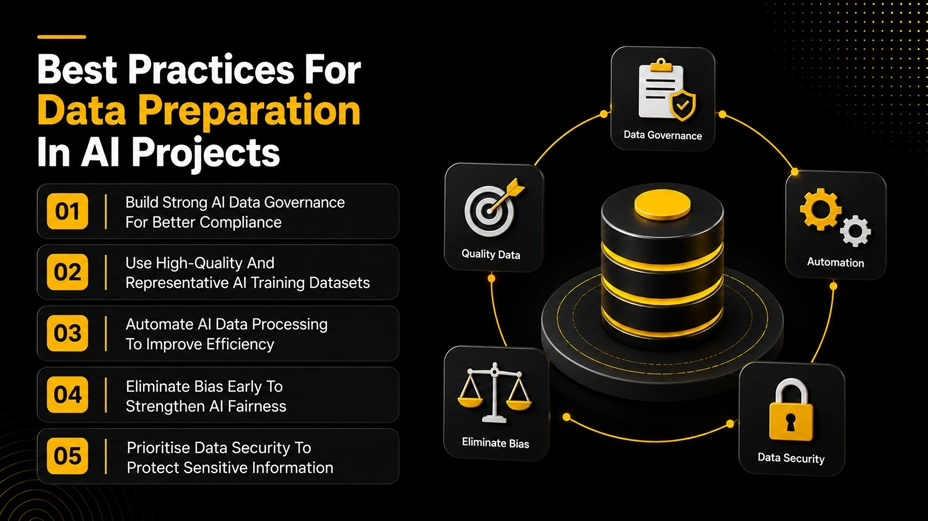
Best Practices for Data Preparation in AI Projects
Build a Strong Data Governance Framework
Strong AI data governance ensures accountability, compliance, and data consistency across departments.
A successful governance framework should include:
- Data ownership policies
- Security and access controls
- Compliance procedures
- Data quality standards
- Metadata management
Organisations using AI for data analysis in industries like healthcare and finance particularly benefit from strict governance due to regulatory requirements.
Focus on High-Quality AI TrAIning Datasets
The success of AI depends heavily on the quality of AI training datasets.
Businesses should ensure datasets are the following:
- Diverse
- Representative
- Bias-free
- Regularly updated
- Properly labelled
For example, facial recognition systems trained on limited demographic data have historically shown lower accuracy rates for under-represented groups. When businesses prioritise balanced datasets during training AI models, they improve both ethical outcomes and operational reliability.
Automate AI Data Processing Where Possible
Manual preparation processes can slow down AI adoption. Automation tools help streamline AI data processing tasks such as cleansing, transformation, and validation.
Benefits of automation include:
- Faster preparation cycles
- Reduced human error
- Improved scalability
- Better operational efficiency
Companies using AI for data analytics across large datasets often adopt automation to reduce operational delays.
Prioritise Data Security and Compliance
AI systems often process sensitive customer and business information. Poor security practices can expose organisations to financial and reputational risk.
Best practices include:
- Encrypting sensitive data
- Restricting unauthorised access
- Conducting regular audits
- Following GDPR and other compliance standards
- Monitoring data usage activity
This is where strong AI data governance becomes essential for maintaining trust and legal compliance.
Eliminate Bias Early
Bias in AI systems usually originates from flawed datasets.
Businesses focused on creating AI models should:
- Review dataset diversity
- Test for discriminatory outputs
- Include cross-functional review teams
- Continuously monitor AI outcomes
Bias reduction improves fairness and strengthens trust in systems used for AI for data analysis and automation.
The Role of AI Data Management in Scalable AI Systems
Effective AI data management helps organisations organise, store, and maintain large volumes of information used for AI operations.
Without strong management practices, businesses may face:
- Duplicate records
- Storage inefficiencies
- Poor accessibility
- Inconsistent outputs
Good AI data management ensures AI teams can quickly access reliable information when training AI models or improving analytical systems.
Key elements of AI data management include:
- Centralised data storage
- Data lifecycle monitoring
- Metadata tracking
- Backup and recovery planning
- Real-time accessibility
Businesses investing heavily in AI for data analytics rely on scalable management systems to support continuous model improvements.
Common Challenges in Data Preparation for AI
Despite advancements in AI technologies, organisations still face several preparation challenges.
Data Silos
Information stored across disconnected systems creates accessibility issues. This affects both AI data processing and overall AI efficiency.
Poor Data Quality
Incomplete or outdated information can reduce the performance of AI training datasets.
High Preparation Costs
Large-scale data preparation for AI projects often requires investment in infrastructure, tools, and skilled professionals.
Compliance Risks
Handling customer data without proper AI data governance can expose organisations to legal penalties.
Limited Skilled Talent
Businesses often struggle to find professionals experienced in creating AI models and managing AI data workflows.
How Businesses Can Improve Data Readiness
Organisations looking to strengthen AI readiness should focus on long-term strategies rather than one-time fixes.
Recommended steps include:
- Conduct regular data audits
- Standardise data collection methods
- Invest in cloud-based AI platforms
- TrAIn teams on governance practices
- Continuously update datasets
- Implement automated monitoring tools
Companies using AI for data analysis benefit significantly when preparation processes are integrated into daily operations rather than isolated projects.
Why Data Preparation Directly Impacts AI ROI
Many organisations invest heavily in AI technology but overlook data readiness. As a result, projects fail to deliver expected returns.
Well-prepared datasets help businesses:
- Reduce deployment delays
- Improve model accuracy
- Lower operational costs
- Increase customer satisfaction
- Support better business forecasting
This is especially important for companies scaling AI for data analytics across multiple departments. As of now, poor data quality remains one of the primary reasons AI projects underperform. So businesses that prioritise data preparation for AI gain a stronger foundation for long-term AI success.
Future Trends in AI Data Preparation
As AI adoption continues to grow, preparation strategies are also evolving.
Emerging trends include:
- Synthetic data generation
- Real-time data processing
- Automated data labelling
- Privacy-preserving AI systems
- Federated learning environments
Modern AI data management systems are increasingly designed to support these advanced capabilities while improving scalability and security.
Companies focused on training AI models at scale will continue investing in smarter preparation frameworks to maintain a competitive advantage.
Conclusion
Strong AI performance starts with strong data preparation. Businesses investing in creating AI models cannot afford to overlook the importance of clean, secure, and properly governed datasets. From improving operational efficiency to enabling smarter forecasting, effective preparation directly impacts AI success.
As organisations continue expanding their use of AI for data analysis and AI for data analytics, the need for scalable AI data management, accurate AI training datasets, and reliable AI data processing practices will only grow stronger.
Companies that prioritise data preparation for AI today will be better positioned to build reliable, ethical, and scalable AI systems in the future.
If you need expert support with AI strategy, data preparation, or AI-driven business solutions, you can reach out at coffee@sparkeighteen.com.